A look at the human heart: ACLS certification & recertification
Ahmed Raza
 Written by Amanda Menard, LPN, a practical nurse since 2005 with experience in ICU, cardiac care, and case management. She is pursuing her MSN for Family Nurse Practitioner and is a former Military Medic with the Louisiana National Guard.
 Reviewed by Lorraine Anne Liu, RN, a registered nurse and cum laude graduate with experience in OR, ICU, delivery room, and OPD. She specializes in pediatric care and primary health care nursing and is certified in BLS, IV therapy, and cardiac assessment.
Changes: Improved article prose and updated game/lesson plan links
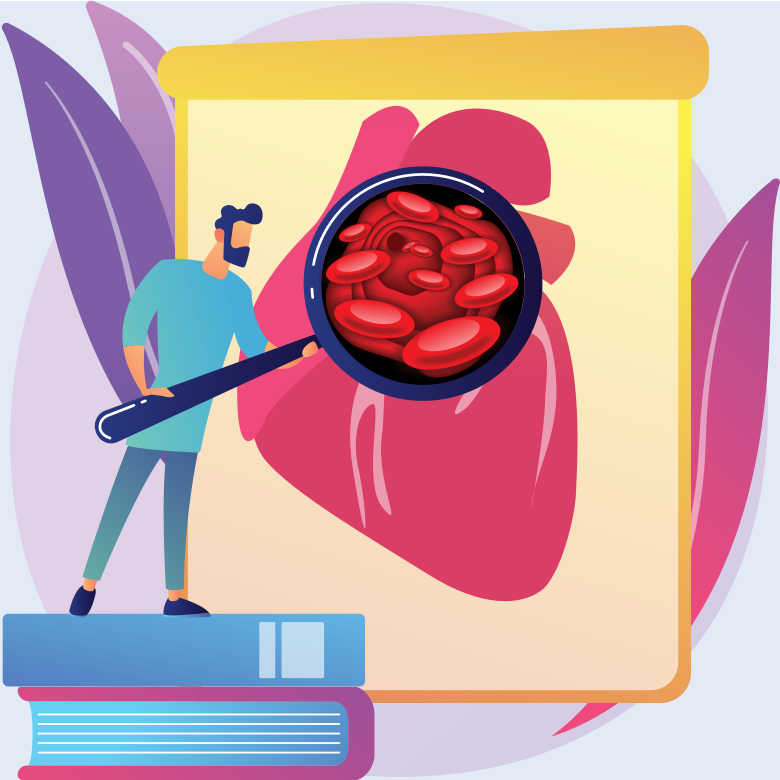
Take a moment and place your hand over your heart. Can you feel it beating? The human heart is an incredible organ that plays a vital role in how your body works. It works like a pump that pushes life-giving blood through your body. The heart is the center of the circulatory system, which feeds oxygenated blood, deoxygenated blood, and nutrients to vital organs and muscle tissue throughout your body; it also helps to carry carbon dioxide and waste out of the body by way of the respiratory system and kidneys. To find out more about your heart and the work it does, see the links below for fun and engaging educational games and lesson plans for children.
Games
- Blast off — Your heart is like a rocket ship. It needs the right fuel to keep it running and to give you enough power to do all the things you want to do. Try your hand at fueling up your rocket with this fun game from the USDA. Don’t forget to pick an activity!
- mash your food! — Too much sugar, salt, or oil could make your heart run poorly, but do you know how many of these foods are hiding in popular food items? Smash the food and find out!
- Food hero — It can be tricky to figure out how much food and exercise you need to keep your heart feeling healthy. This game from HealthySocial.org can help you discover what makes a good meal and a good exercise routine.
- Chef solu’s build-a-meal game — Exercise and good nutrition are important to keeping your heart in perfect condition. Give them both a try in this fun, fast-paced game!
- Dining decisions — To keep your heart healthy, you need to eat healthy foods. See if you can tell which foods are good for you with these nutrition resources.
- Circulatory and respiratory systems tour — Take a trip through your lungs and veins in this animated tour. You’ll learn about the heart and smaller processes like how blood carries oxygen through the body.
- Label the heart — Once you’ve read up on the heart and its parts, why not see how much you remember? This game will test your knowledge about the parts of the heart.
- The blood typing game — This game’s for older kids, but it’s still good fun. Learn how to figure out what blood type someone is, and prescribe the right blood transfusion. Universal blood type.
- The circulatory system game — An interactive online game about the circulatory system.
- How does blood flow through the heart? — You probably know that blood goes through the heart, but it can be harder to imagine how it does that. This will show you how the different chambers in the heart work together.
- The heart quiz — How much do you really know about your heart? Take this quiz from KidsHealth and find out!
- The healthy fridge quiz! — To keep your heart healthy, you need to eat the right foods. Learn which foods are good for your heart in this fun quiz!
- Structures of the heart — A handy website to learn the structures of the heart.
Lesson plans
- Grade two heart lesson package (PDF) — It’s never too soon to start learning about how your heart works. Students can learn about the structure, function, and necessary nutrition for a healthy heart in this self-contained lesson plan, provided by the Heart and Stroke Foundation.
- You gotta have a heart lesson plan — What makes our hearts beat differently? Find out in this lesson from the Fermi National Accelerator Laboratory.
- Anatomy of the heart — In this lesson, students can learn about the structure of the heart and its parts. The lesson includes fun pre-activities to get students interested as well as an end review.
- Grade 1 lesson plans — Heart health (PDF) — From how the heart works to how to keep it healthy, this wonderful resource has a lesson plan for everything. There are plenty of fun activities for class, snack time, and even for home.
- Here’s to your healthy heart! — Discovery Education has a great lesson plan that will teach kids about heart disease and how to make good lifestyle decisions. All the required worksheets are included.
- Bill Nye: blood and the circulatory system — This twenty-two minute video is a great resource for teaching kids about how the heart and circulatory system works. For a fun introduction to the topic, you can’t beat this video.
- What is blood, and how does it circulate? — Kids can often learn better through seeing and experimenting. This creative lesson plan demonstrates how the heart works and asks students to draw what they see.
- Flow of blood through the heart — Trying to decide on an activity that students will enjoy? This resource explains how blood flows through the heart in a way that’s easy to understand.
- Circulatory system lesson ideas — The heart is an important part of the circulatory system. Brainpop educators has a great lesson that can introduce kids to the human heart, how it works, and how the circulatory system works to make blood flow through the body.
- The body systems lesson plan (PDF) — From the circulatory to the respiratory systems, this lesson plan from the Colorado School of Mines has many fun activities for students to try. A few worksheets are included.
For advanced topics, get into dopamine antagonists, epinephrine, and some of the cardiac topics from any ACLS online renewal course.
Print outs
- Human heart coloring page — It can be tricky to remember what arteries and veins are. This Crayola coloring page provides a numbered coloring guide to help you see the difference between the two.
- Label the heart — Think you know the heart inside and out? Test your skills with this printable, which has left blank spaces for you to label the parts of the heart.
- Labeled heart graph — This picture has all the parts of the heart labeled, and it shows how the blood moves through the heart and it could be a very good study tool for you to review at home.
See also our study guide for other body systems. Get certified through our 100% online course. Our courses are accepted in North America and internationally.
Test your knowledge
Stay on track!
Would you like a reminder when your ACLS certification expires, plus study tips?
How we reviewed this article
Our experts continually monitor the medical science space, and we update our articles when new information becomes available.
- Current versionMail the author of this pageEmail
- Jul 17, 2026
Copy edited by:
Copy editorsChanges: Improved article prose and updated game/lesson plan links- Sep 17, 2025
Written by:
- Jun 7, 2020
Reviewed by: